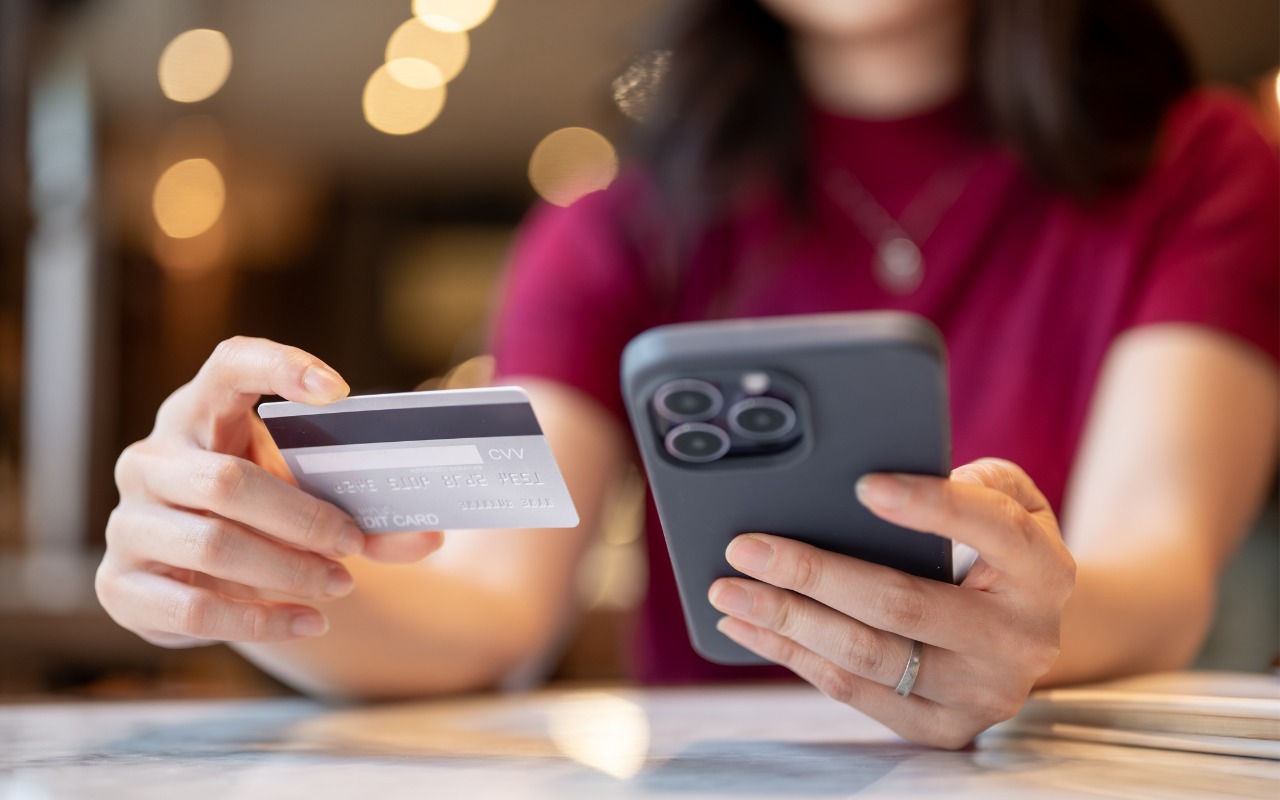
iOS 26 Can AutoFill Credit Card Details

Sadly, not all websites and apps support Apple Pay, so we’ve become accustomed to manually entering our credit card information into fields, like animals. No longer! In iOS 26, the Wallet app now supports AutoFill. If you need to add a card—those set up with Apple Pay are already available—open Wallet, tap the three-dot menu in the top-right corner, tap AutoFill, then tap Add Card. You can scan the card with your camera or enter details manually. Then, whenever you’re checking out on a website or in an app that doesn’t support Apple Pay, tap a payment field. You may be able to select a saved card from the suggestions above the keyboard, or you may have to tap in the field to bring up the text menu, and tap AutoFill > Credit Card (below left). When you invoke AutoFill from above the keyboard, your card number, expiration date, and security code will be automatically entered. Using the menu requires tapping the blue text for the field you want to fill (below right).

(Featured image by iStock.com/BongkarnThanyakij)


Social Media: Tired of typing credit card numbers into websites and apps that don’t support Apple Pay? iOS 26 lets you save cards in Wallet and use AutoFill to enter your payment details anywhere—here’s how to set it up and use it.

Similar Posts

  • It is definitely feeling like spring here in Key West as the flowers are blooming and we wake up each morning to the birds singing (okay and the roosters crowing, too). I get the morning snow (or lack thereof) report from Emily every day and spring hadn’t quite arrived up in Georgia when I was there, either.

    Grace and I are heading up to the 75th Annual Daytona Bike Week for a couple days and then hitting a Cirque du Soleil show in Miami on the way back. Somewhere in there I will be writing Kibbles, perhaps on my iPad mini 4.

    Thank you for reading this issue of Kibbles & Bytes!

    Your Kibbles & Bytes Team,

    _Don, Emily & Hadley_

  • Never Paste Unknown Text into Terminal!

    Here’s a new scam to watch for. A client reported running across a suspicious website masquerading as a human verification test. Instead of…

  • Who cares about QR Codes?

    By now you’ve probably seen one of those odd-looking white squares with a bunch of smaller square dots that make up a random pattern inside–that’s a QR code. QR stands for “Quick Response,” and a QR code is a form of barcode, just like on the packaging of nearly everything you buy.

    Usually QR codes are used to store Web links–URLs–so an ad can display just the QR code instead an unwieldy and hard-to-type web address. But QR codes aren’t just for ads. They’ve appeared on business cards, in magazines and books, on coins and bills, and even on tombstones–any place it would be nice to help someone load a Web link into a smartphone but where there isn’t enough room for a URL or in situations where viewers won’t remember the URL later. And the links? They can display anything that can appear on the Web: text, photos, videos, games, and more.

    Only one built-in iPhone app can scan QR codes–the Wallet app in iOS 9–but it can scan only QR codes that are associated with Wallet passes, things like airline boarding passes, concert tickets, and iTunes gift cards. For QR codes that encode any other sort of data, Wallet shows an error. It would be nice if Apple would add general QR scanning capabilities to Wallet or the Camera app, but until that happens, you’ll need another app.
    There are numerous QR code scanning apps in the App Store, but if you need a recommendation, give TapMedia’s QR Reader for iPhone a try. It’s free with ads (remove them with a $1.99 in-app purchase), scans both QR codes and traditional barcodes on most commercial products, and displays the associated information within the app. It can even help you create your own QR codes.

    To use a QR code scanner, launch the app, allow it to access the camera when it asks, and then point it at the QR code. Good apps will scan nearly instantly, but if not, move the camera so the QR code is centered between the guides. If even that doesn’t work, move forward or back so the camera can focus on the centered code.

    Once the code has been scanned, the app will usually bring up an in-app Web browser to display whatever was encoded. For certain kinds of data, like books or grocery items, the app may go right to Amazon or a price comparison site. Good apps will also keep a record of sites you’ve scanned, so you can go back to them later, even if you can no longer scan the QR code.

    So download a QR code scanning app and keep an eye out for QR codes. Once you start looking, you’ll find them everywhere–it’s a modern-day treasure hunt!